The Role of IoT in Modern Factory Automation
The manufacturing industry is undergoing a digital transformation driven by connected technologies—and at the center of this evolution is the Internet of Things (IoT). Modern factories are no longer isolated systems; machines, sensors, and controllers now communicate continuously to create intelligent production environments.
For manufacturers and OEMs, IoT is not just a technology trend. It is the operational backbone of Industry 4.0, enabling real-time visibility, predictive maintenance, and data-driven production management.
This article explains how IoT is reshaping factory automation, the practical benefits it offers manufacturers, and why companies are increasingly adopting IoT-ready machines and motion control systems.
What is IoT in Factory Automation?
The Internet of Things (IoT) in factory automation refers to a network of connected industrial devices—controllers, HMIs, sensors, and machines—that continuously collect and exchange operational data. These devices communicate through industrial networks and cloud platforms, allowing manufacturers to monitor production conditions in real time.
IoT enables machines to share information about performance, operating status, and environmental conditions. Instead of relying only on operator observation, production decisions can be based on measurable operational data.
Through connected systems, manufacturers can:
- Monitor machine health and operating performance
- Identify potential failures before breakdown occurs
- Optimize energy usage and reduce material waste
- Improve production flexibility and scheduling
In simple terms, IoT allows factories to move from reactive maintenance and manual supervision to proactive, data-driven operations.
Why IoT Matters for Manufacturers
Modern manufacturers must increase productivity while maintaining quality and controlling costs. Traditional automation improves machine operation, but it does not provide full operational visibility. IoT fills this gap by delivering continuous monitoring, analytical insight, and remote accessibility across the production environment.
The primary advantages include:
1. Real-Time Monitoring
Connected devices track machine cycles, energy consumption, and production output continuously. Operators and managers receive immediate alerts when performance deviates from expected values, allowing faster corrective action.
2. Predictive Maintenance
IoT-enabled controllers detect abnormal vibration, temperature, or cycle behavior before mechanical failure occurs. Maintenance can be scheduled in advance, preventing unexpected downtime and expensive emergency repairs.
3. Process Optimization
Collected operational data allows engineers to fine-tune machine settings. Adjustments based on real performance data help reduce scrap, improve cycle times, and stabilize production quality.
4. Energy Efficiency
Energy consumption across machines can be tracked and analyzed. Manufacturers can identify inefficient equipment usage patterns and reduce unnecessary energy expenditure.
5. Remote Access and Control
Managers and service teams can monitor machine conditions remotely through dashboards and secure network connections. This capability is especially valuable for multi-location operations and global OEM support.
Key Applications of IoT in Modern Factories
IoT integration supports multiple manufacturing processes and equipment types:
- Smart Injection Molding: Connected HMIs analyze pressure, temperature, and cycle data to maintain consistent product quality.
- Hydraulic Press Systems: Sensors track force, motor load, and usage patterns, enabling predictive maintenance and energy optimization.
- Packaging Automation: Machine synchronization improves throughput while minimizing downtime and changeover delays.
- Quality Assurance Systems: Production parameters are recorded and compared against predefined standards to ensure consistency.
- Energy Monitoring: IoT dashboards visualize real-time power usage and support sustainability initiatives.
How IoT Elevates Factory Automation
The transition from traditional automation to connected automation significantly improves manufacturing operations. Instead of machines operating independently, they become part of a coordinated production ecosystem.
IoT-enabled automation provides:
- Greater visibility into machine and production performance
- Data-driven operational decisions
- Higher equipment uptime
- Reduced maintenance cost
- Improved utilization of manpower and resources
These advantages allow manufacturers to respond faster to demand changes and maintain competitive production efficiency.
IoT and Industry 4.0
Industry 4.0 represents the integration of automation, connectivity, and analytics into manufacturing systems. IoT technology is the foundation that allows machines to exchange data and operate intelligently within this environment.
Connected machines support:
- Cloud-based monitoring platforms
- Remote diagnostics and service support
- Predictive maintenance scheduling
- Advanced analytics and production reporting
Without IoT connectivity, factories remain isolated and cannot fully participate in modern smart manufacturing ecosystems.
Connected Motion Control Systems
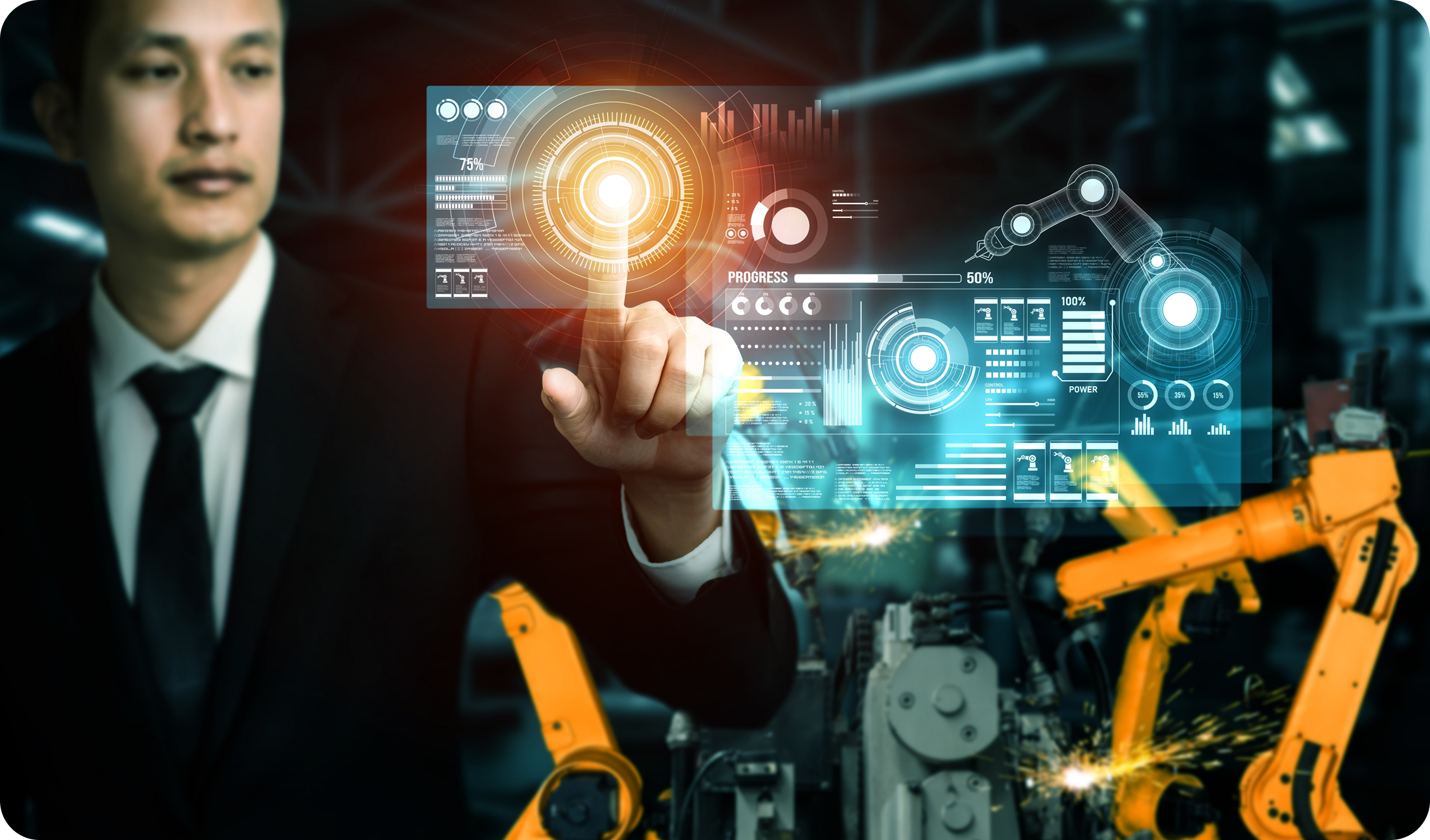
IoT-compatible HMIs and motion controllers allow manufacturers to monitor machines continuously and improve operational decision-making. Connected systems support real-time dashboards, remote service access, and performance analytics, helping facilities maintain consistent production.
Well-designed connected control platforms enable:
- Centralized monitoring of machines
- Remote diagnostics and troubleshooting
- Operational reporting and data logging
- Integration with smart factory infrastructure
These capabilities ensure machines remain efficient, reliable, and adaptable to evolving production requirements.
Conclusion
IoT has become a foundational component of modern manufacturing. By connecting machines, collecting operational data, and enabling predictive analysis, it transforms traditional automation into intelligent production systems.
Manufacturers adopting connected automation gain higher productivity, improved quality, and stronger operational control. As Industry 4.0 adoption accelerates, factories that implement IoT-enabled systems will be better positioned to compete in the global manufacturing environment.